Blogs
Grow Vegetables on Water: India’s Floating Gardening Revolution
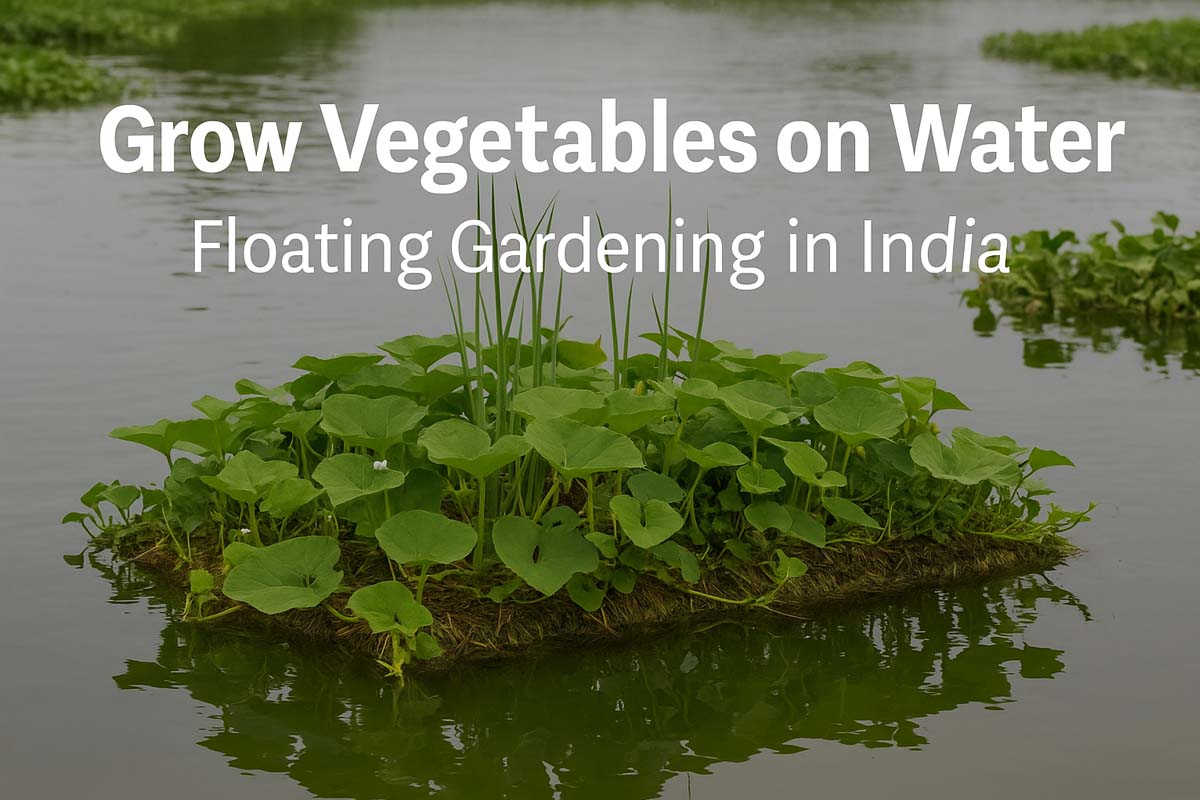
Floating farming is an innovative method of growing crops in regions that remain waterlogged for extended periods. It is primarily designed to adapt agriculture to frequent or prolonged flooding. In this system, floating beds made of decomposing vegetation act as a natural compost layer for plant growth. These beds rest on the surface of the water, effectively converting submerged areas into usable agricultural fields.
What is Floating Gardening?
Floating gardening is a sustainable agricultural method designed to grow crops in areas that remain submerged during heavy rains or seasonal floods. Instead of relying on soil-based farming, this system uses floating beds made of natural materials like water hyacinth, bamboo, mud, and compost, which act as both the foundation and fertilizer for crops.
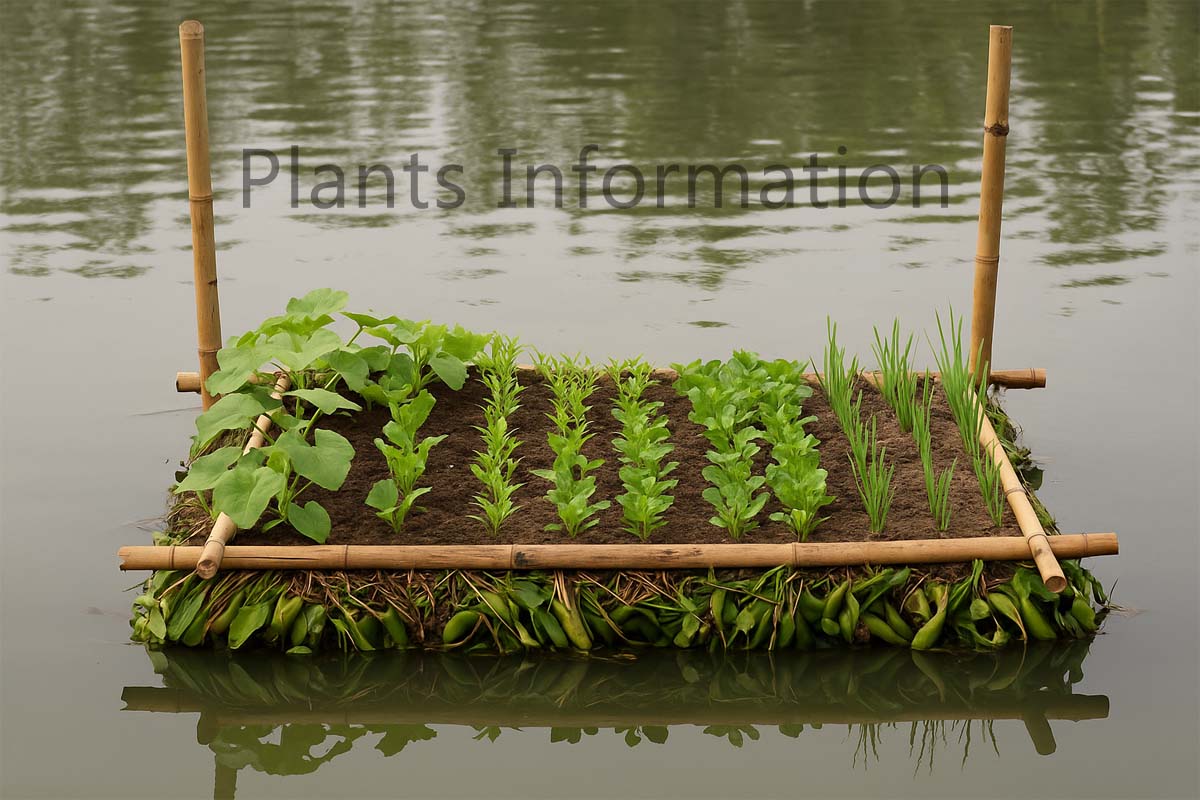
- These floating beds are usually 5 feet wide and up to 25 feet long, providing enough space for vegetables and herbs.
- At the base, dried water hyacinths are tightly woven into a mesh structure.
- Above this, multiple layers of silt, chopped hyacinth leaves, vermicompost, and farmyard manure are added, creating a nutrient-rich growing medium.
This technique is low-cost, eco-friendly, and climate-adaptive, making it an excellent solution for flood-prone regions of India, especially in Assam, West Bengal (Sundarbans), and Kerala.
Step-by-Step Guide: How to Build a Floating Garden
Building a floating garden at home or in flood-prone areas is simple if you follow the right steps. Here’s a complete guide:
1. Choose the Location
Select a calm water body such as a pond, lake, or waterlogged field with minimal wave movement.
2. Gather Materials
You will need:
- Water hyacinth (dried) – to create the base mesh.
- Bamboo poles or wooden frames – for support.
- Mud or silt – to create a planting layer.
- Compost or farmyard manure – for nutrients.
- Dry leguminous leaves – for the top layer.
3. Create the Base Raft
- Intertwine dried water hyacinth to form a strong, floating mat.
- Fix bamboo poles along the sides to provide stability.
4. Add Layers of Soil & Compost
- Spread a 4-inch layer of silt mixed with chopped hyacinth leaves.
- Add a 5-inch layer of compost and farmyard manure.
- Top with a 3-inch layer of dry leaves, soil, and silt to create a nutrient-rich planting bed.
5. Plant Short-Rooted Vegetables
Choose crops like spinach, coriander, amaranth, tomatoes, or okra. These thrive in the shallow, fertile layers of the floating bed.
6. Maintenance Tips
- Water the crops using lake or pond water during dry spells.
- Add organic compost every 2-3 weeks to maintain soil fertility.
- Rotate crops to improve nutrient balance.
 Climate‑Resilient Floating Gardens: India’s Hope Amid Monsoon Chaos
Also Read This :Parijat (Night-Flowering Jasmine) – The Tree from Heaven
Major Crops Grown in Floating Farming in India
Floating gardens are ideal for short-rooted vegetables and leafy greens because the floating beds have a limited soil layer. Farmers across Assam, West Bengal, and Kerala cultivate a wide range of vegetables and herbs on these water-based platforms. Some of the most popular crops include:
- Spinach (Palak)
- Amaranth (Chaulai)
- Coriander (Dhaniya)
- Brinjal (Baingan)
- Tomato
- Beans
- Ladyfinger (Okra/Bhindi)
- Chili (Mirchi)
- Bitter Gourd (Karela)
- Mint (Pudina)
These crops grow well on the nutrient-rich compost layers of floating rafts and can be harvested multiple times during the monsoon season.
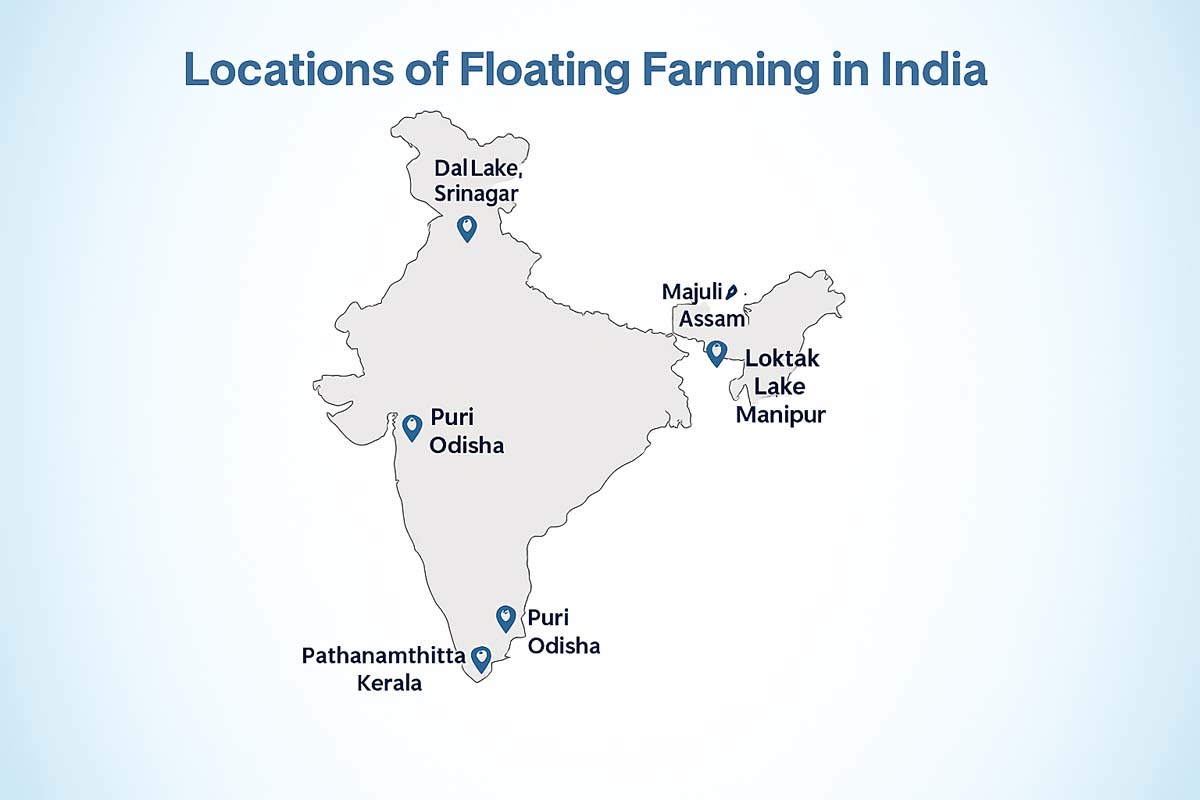
Geographical Hotspots of Floating Farming in India
Floating farming is practiced in several water-rich and flood-prone regions of India. These locations are known for their traditional use of floating beds for vegetable cultivation:
- Dal Lake, Srinagar (Jammu & Kashmir) – Famous for its floating gardens known as Raad.
- Majuli Island, Assam – Flood-prone Brahmaputra islands use floating beds during monsoon.
- Loktak Lake, Manipur – Known for phumdis, natural floating masses used for farming.
- Puri, Odisha – Coastal regions adopt floating beds during heavy floods.
- Kerala (Alappuzha, Kottayam, Pathanamthitta) – Backwaters are ideal for innovative floating vegetable cultivation.
Benefits of Floating Gardening in India
Floating farming is not just an innovative method but a climate-smart solution that offers multiple environmental and economic advantages. Here are the key benefits:
- Climate Resilience:
Ideal for flood-prone and waterlogged areas, ensuring continuous food production even during heavy monsoons. - Low-Cost & Eco-Friendly:
Uses readily available natural materials like water hyacinth, bamboo, silt, and compost, reducing the need for costly infrastructure. - Organic Crop Production:
The decomposing plant matter acts as natural fertilizer, eliminating the need for chemical inputs and promoting organic farming practices. - Efficient Land Use:
Converts otherwise unusable waterlogged areas into fertile agricultural beds, increasing food security in rural communities. - High Yield of Leafy Vegetables:
Ideal for spinach, amaranth, coriander, tomatoes, beans, okra, and mint, which grow quickly in nutrient-rich floating beds. - Environmentally Friendly:
Prevents water hyacinth (a weed) from choking lakes and rivers by repurposing it as a farming base. - Sustainable Livelihood:
Supports small-scale farmers, fisherfolk, and communities affected by floods, offering a reliable source of income and food supply.
Also Read This :Seasonal Guide: Best Plants to Grow in August 2025 in India
India Case Study: Majuli & Sundarbans (2024–2025)
In Majuli Island, SAFE helped local farmers build float‑rafts using bamboo & vermicompost. Despite cyclones and floods, they continued growing lettuce, cabbage, ridge‑gourd, strawberry and chilies on waterbeds. Each float supports multiple cropping cycles with high yields and market value.
DIY Floating Garden in India: Quick Guide
| Step | Details |
|---|---|
| Build raft | Use woven water hyacinth base, ~0.5 m thick |
| Add compost layers | Hyacinth compost, vermicompost, sawdust and light soil |
| Anchor | Bamboo or wooden poles |
| Planting | Sow seedlings of okra, spinach, gourd, amaranth |
| Maintenance | Water lightly, replenish compost after each cycle |
| Harvest | 2–3 crops per monsoon + residual compost for winter planting |
This system is replicable on small ponds, backyard tanks, or floodwater sites. Community implementation often uses locally available materials to keep it low-cost and sustainable.
Challenges & Considerations
- Labor intensity: Making rafts and seed balls is labor-intensive & time‑consuming.
- Vulnerability to strong storms: Beds may degrade in extreme weather. Choice of materials and anchoring is crucial.
- Market access & pricing: Some farmers faced low vegetable prices post-harvest impacting profitability.
Future Trends & Innovations
- Aquageoponics (IFCAS): India and Bangladesh are piloting floating systems combining vegetable and fish farming in one unit—using pond systems where waste from fish fertilizes plants above.
- Solar-powered drip irrigation integrated with float farms to combat salinity in the Sundarbans area.
- Global scaling: Projects are evaluating floating farming for delta and island nations, including Myanmar, Vietnam, Cambodia—indicative of its global food-security potential.
Conclusion
Floating gardening has emerged as a life-saving adaptation for flood-prone regions of India and Bangladesh. By converting waterlogged landscapes into productive farms, this climate-resilient method ensures food security, income generation, and ecological sustainability. Its low-cost, low-tech nature makes it perfect for marginalized communities. As global climate challenges grow, replicating and innovating on such traditional wisdom can safeguard rural livelihoods and urban adaptive farming alike.
Also Read This :Vertical & Container Gardening Hacks for Small Indian Homes – 2025 Guide
FAQs
Q1. What vegetables grow well on floating gardens?
Okra, Indian spinach, red amaranth, eggplant, bitter gourd, cucumber, chili, wax gourd, turmeric, ginger.
Q2. Is floating gardening suitable for urban ponds?
Yes, small backyard ponds or tanks can host floats using water hyacinth and compost, though scale may be limited.
Q3. How long do floating beds last?
Typically 3–4 months; decomposed beds then enrich soil for winter planting cycles.
Q4. Can fish be integrated with veggie floats?
Yes—through aquageoponics (IFCAS system), fish waste nourishes the plants above, enabling mixed farming.
Q5. Who benefits most from this approach?
Landless, marginalized and flood-affected communities; women-led groups especially see economic uplift and food security.