Blogs
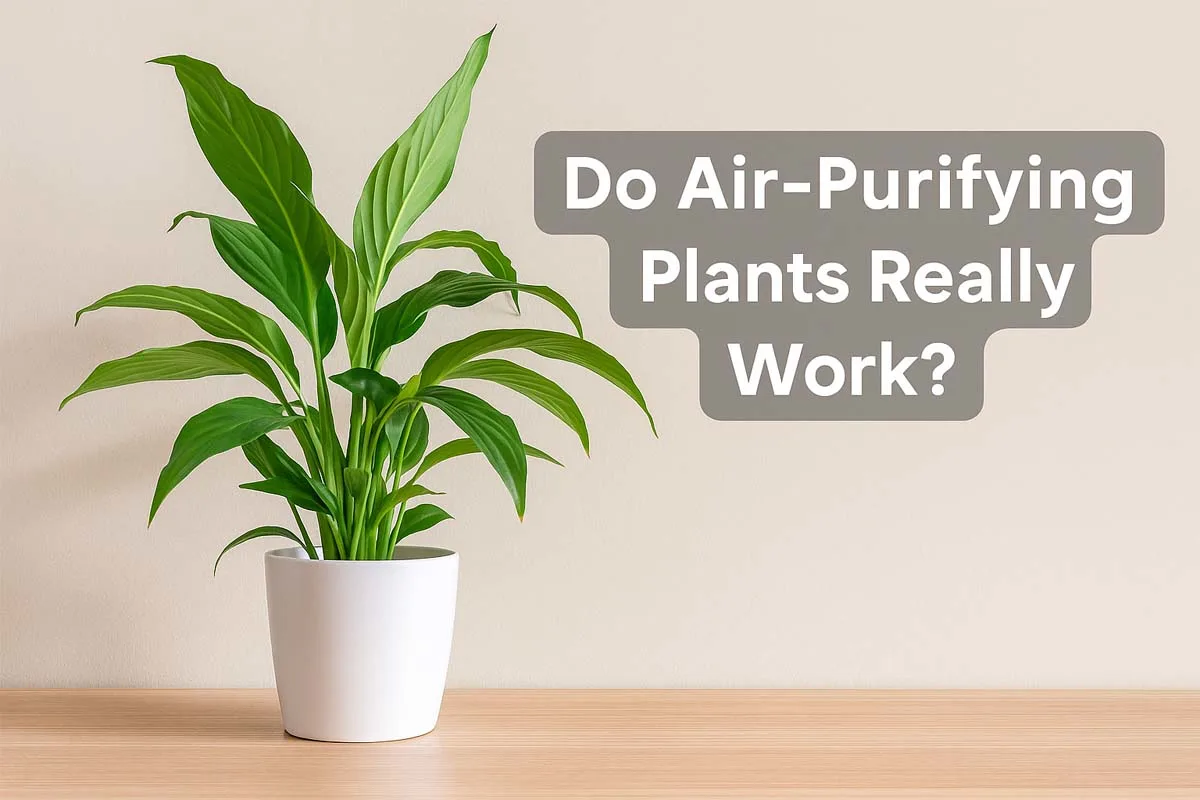
Do Air-Purifying Plants Really Work? Science vs. Hype
Imagine walking into a sunlit room filled with lush green foliage – it feels fresher already. Many plant lovers claim these houseplants silently detoxify the air, removing toxins from paint fumes, cleaning agents or even smoke. Popular lists tout Snake Plants, Peace Lilies, Aloe Vera, Areca Palms and even Neem trees as natural air purifiers.
But what does science actually say? It turns out the idea comes from a 1989 NASA study, and modern research suggests the situation is more myth than miracle. In fact, scientists note that our homes are so well-ventilated that air exchange with the outdoors removes most volatile chemicals, dwarfing any effect a few potted plants could have. We spend about 90% of our time indoors, where toxin levels can be up to 5× higher than outside, so the appeal of “natural” purification is understandable. However, multiple reviews now conclude that in a typical home, plants’ cleaning power is minuscule. Below we explore the science and the hype.
Popular “Air-Purifying” Plants
Over the years, a handful of indoor plants have become famous for supposedly cleansing indoor air. The original NASA Clean Air Study tested many common species and identified several that removed volatile organic compounds (VOCs) in sealed chambers. For example, Snake Plants (Sansevieria) in the study absorbed benzene, formaldehyde and trichloroethylene from the air.
Peace Lilies (Spathiphyllum ‘Mauna Loa’) were found to mop up benzene, formaldehyde and TCE, and they even reduced xylene and ammonia levels in the test chamber. Areca Palms (Dypsis lutescens) showed formaldehyde removal, while Spider Plants (Chlorophytum comosum) and Rubber Plants (Ficus elastica) also featured in NASA’s lists. Aloe Vera only removed trace benzene in tests, and Neem (Azadirachta indica) – often mentioned in India as an air-purifier – wasn’t part of the NASA experiments at all. (Neem’s reputation comes more from its antibacterial, pesticidal properties than any proven VOC cleanup.) These findings fueled endless home-gardening articles recommending a “jungle” of plants for cleaner air.
- Snake Plant (Mother-in-Law’s Tongue) – NASA found it removes benzene, formaldehyde and TCE.
- Peace Lily – Shown to reduce benzene, formaldehyde, TCE, plus xylene and ammonia in chamber studies.
- Areca Palm – Absorbs formaldehyde (small effect).
- Aloe Vera – Barely removed any VOC (only ~1 µg/h benzene).
- Neem (Azadirachta indica) – Often claimed to cleanse air outdoors (trees release oxygen at night), but has not been scientifically tested for indoor VOC removal.
These indoor champions often make the cut on “best air-cleaning plants” lists. But their touted abilities come mainly from laboratory chamber tests, not lived-in houses.
What the Science Says: Lab vs. Real Life
The NASA Clean Air Study (1989) was done under very controlled conditions – small sealed Plexiglass chambers with a fan and activated carbon filters circulating air through the soil. In that setup, plants could remove a large percentage (even ~70%) of a single VOC over 24 hours. For instance, a Peace Lily cut formaldehyde levels dramatically and a Chrysanthemum knocked down benzene in those tests. However, modern analyses point out that these conditions do not match a normal home or office.
Studies emphasize that real buildings are “surprisingly leaky” and have many simultaneous pollution sources. In most homes, natural ventilation (through cracks, windows, HVAC) already removes indoor VOCs at a rate equivalent to having hundreds of plants per square meter. In fact, a 2019 meta-analysis recalculated past data and estimated that the median clean air delivery rate of one plant was only about 0.023 m³/hour. At that rate, you would need on the order of 10–1,000 plants per square meter of floor space just to match what ordinary air exchange does for free. Put simply, to see any real drop in airborne toxins, you’d need dozens or hundreds of plants packed into each room – hardly practical.
The difference between lab and living room is made clear by several researchers. For example, BBC’s Science Focus reports that scientists estimate we’d have to “squeeze between 10 and 1,000 plants into each square metre” to reach the VOC removal rates our buildings already achieve naturally. Similarly, the American Lung Association notes that unless you have hundreds of plants (680 plants in a 1,500 sq ft home, by one calculation), an air change through ventilation is doing most of the cleaning, not the plants. Even a 2017 lab study on ozone (a related pollutant) found that houseplants contributed “at best” only 0.9–9% of indoor ozone removal. That study concluded you’d have to fill an entire room from floor to ceiling with plants to make a significant difference in air quality.
That’s not to say plants have no effect – in a tightly sealed box with one pollutant, they can pull it down. But our homes are not sealed spacecraft. They have multiple pollutants continuously entering and leaving, so the tiny per-plant removal rates are swamped. As the NASA review authors and later experts point out, the sealed-chamber findings “do not translate well to the typical home or office”.
Myth vs. Reality: On paper, yes, plants absorb VOCs. In practice, realistic indoor settings show a negligible impact. Studies and experts repeatedly emphasize that air purifiers or simply opening a window are far more effective at freshening indoor air. LiveScience notes that while a single spider plant won’t purify your room, a green wall (many plants covering a wall) could make a detectable difference – again highlighting the “massive scale” needed. A 2020 Trends in Plant Science review bluntly states that plant capacity for indoor pollutant removal “remains largely unknown” and species effectiveness is under-studied In short, houseplants have many benefits (beauty, humidity regulation, stress relief) but air purification in homes is not one of their strengths under normal conditions.
| Plant | Targeted Toxins | Real-World Effectiveness |
|---|---|---|
| Snake Plant (Sansevieria) | Benzene, Formaldehyde, TCE | Removes VOCs well in lab tests (sealed chamber); negligible effect in a normal room unless hundreds are used. |
| Peace Lily (Spathiphyllum) | Benzene, Formaldehyde, TCE, Xylene, Ammonia | Removes multiple VOCs in NASA studies; real indoor impact is minimal, requiring many plants per area. |
| Areca Palm | Formaldehyde | Shown to absorb formaldehyde in experiments; by itself it won’t significantly clean room air. |
| Aloe Vera | Benzene (trace) | Practically no removal (only ~1 µg/h benzene in tests); essentially no effect on indoor air. |
| Neem (Azadirachta indica) | No NASA data on VOC removal | Often touted as “purifying,” but lacks scientific evidence for indoor VOC removal. |
Table: Popular air-purifying plants, the VOCs they were tested against, and their practical effectiveness. “Effectiveness” is based on published research; in all cases, normal home conditions negate most of the lab results.
Plant Purification Tips for Indoor Gardeners
So if a single fern or ficus won’t replace an air filter, does it mean you should give up on houseplants? Not at all – just adjust expectations and use them wisely. Here are some tips for plant lovers who still want to make the most of indoor greenery:
Use Many Plants: A few small plants won’t change much. If you really want them to help, group several larger plants together. Researchers suggest that multiple species in significant volume are needed to see any air-quality benefit. (Some studies simulated “green walls” to achieve a noticeable effect.)
Improve Airflow to Roots: Wolverton and colleagues found that aerating the potting soil and ensuring good air circulation near the plants significantly boosts their ability to remove pollutants. In practice, this could mean using a circulating fan or an air-purifying planter with a built-in fan or charcoal filter to pull air through the soil.
Choose Large-Leafed Species: Big foliage can adsorb more particles and VOCs by surface area. Plants like Peace Lilies, Boston Ferns and Rubber Plants have been shown to capture formaldehyde and other gases in tests. Just remember: even large leaves don’t do much without enough plants.
Combine with Ventilation: The biggest single step for indoor air quality is ventilation. Whenever possible, open a window or run your HVAC system’s fresh air intake. Use plants as a complement, not a substitute, for fresh air exchange.
Maintain Plant Health: Healthy plants with active root microbes are more effective at breaking down VOCs. Keep soil moist (but not waterlogged) and change the soil periodically to avoid a buildup of mold or other off-gassing.
Consider Humidity and Comfort: Even if VOC removal is low, plants help moderate humidity and make rooms feel fresher. Maintaining 30–50% indoor humidity (often achieved by plants or a humidifier) can also make air feel cleaner. A pleasant-smelling herb or flowering plant might give a sense of fresh air, even if it’s not scientifically “purifying”.
Ultimately, think of houseplants as one part of a healthy home environment – they can boost mood, productivity and humidity, and perhaps remove trace toxins over long periods. But don’t rely on them alone for clean air. For serious concerns (chemical off-gassing, wildfire smoke, allergies), a HEPA or activated-carbon air purifier is far more reliable.
Conclusion
Air-purifying plants live in a world of myth vs. reality. In a sealed NASA lab, certain houseplants definitely removed VOCs from the air – sometimes impressively so. Those headlines convinced many that bringing a few ferns indoors could detoxify a living room. However, decades of follow-up research have revealed the caveat: you’d need enormous numbers of plants to match what normal ventilation already does. In a real home, plants’ air-cleaning abilities are almost entirely swamped by air exchange and multiple pollutant sources.
In balanced perspective, green thumbs should take heart: houseplants won’t poison your environment, but neither will they magically purify it. They remain a charming way to add oxygen, humidity and life to your rooms. But if your goal is measurably cleaner air, science says you’re better off opening a window or investing in a certified air filter. In short – yes, air-purifying plants “work” in theory and lab chambers, but in everyday life their effect is so small that the claim is mostly hype. Plant on for beauty and wellbeing, but remember: fresh air comes from outside, not just from the soil.
FAQs
- Do houseplants really improve indoor air quality?
Not in any meaningful way for most homes. Studies show that except in tightly sealed labs, houseplants only make a tiny dent in indoor pollution. To see the VOC reductions seen in experiments, you’d need hundreds of plants in a room. Otherwise, normal ventilation is doing the bulk of air cleaning. - How many plants are needed to purify indoor air?
It sounds unbelievable, but analyses indicate on the order of 10–1000 plants per square meter would be required to match the rate of pollutant removal from typical air exchange. In other words, dozens of large plants per small room – not practical for a home – would be needed to significantly scrub the air. - Which plants are best for cleaning indoor air?
NASA’s tests highlighted a few top performers: Peace Lily, Snake Plant, Spider Plant, Bamboo Palm and Gerbera Daisy each removed certain VOCs in chamber tests. For example, Peace Lilies took up benzene and formaldehyde, Snake Plants handled benzene and TCE, etc. But no plant is a magic cleaner; all share the same limitation that you’d need very many to change room air quality. - Can plants remove toxins like formaldehyde or benzene?
Yes, under lab conditions specific plants have been shown to absorb compounds like formaldehyde and benzene. For instance, Snake Plants and Peace Lilies showed formaldehyde removal in tests. However, in normal living spaces the actual amount removed by even a few plants is negligible. In practice, they won’t reliably cut formaldehyde levels unless you have an extraordinary plant setup. - Are air-purifying houseplants more hype than fact?
Most evidence points to “mostly hype”. Plants do have many benefits (better air moisture, aesthetic and mental uplift), but scientific reviews conclude that claims about indoor pollution removal are overstated. If clean air is your goal, the consensus is to prioritize mechanical filters or fresh air ventilation over potted plants.