Blogs
Rainwater Gardening: How to Use Monsoon Showers to Grow a Sustainable Garden
As June welcomes the monsoon season across India, the rhythmic downpour brings not just relief from scorching heat but also a golden opportunity for gardeners. Rainwater gardening is a sustainable and eco-friendly way to use nature’s gift to nurture your plants, reduce water bills, and promote a healthier ecosystem.
This blog will guide you on how to capture, conserve, and wisely use rainwater to build a thriving garden during the monsoon season.
What is Rainwater Gardening?
Rainwater gardening involves collecting and using rainwater to irrigate your plants instead of relying on municipal or groundwater sources. It goes beyond just water collection—it integrates water conservation, plant selection, and soil management to create a low-maintenance, eco-conscious garden.
From rooftop containers to backyard garden beds, rainwater gardening works in all spaces and is especially beneficial during the monsoon months.
Why Use Rainwater for Gardening?
Rainwater is:
- Free from salts and chemicals found in tap water.
- Soft and pH-neutral, making it gentler on plants.
- Ideal for soil health, promoting microbial activity.
- An excellent way to reduce your ecological footprint.
By using rainwater, gardeners contribute to sustainable living and reduce the strain on local water supplies.
How to Collect Rainwater for Gardening
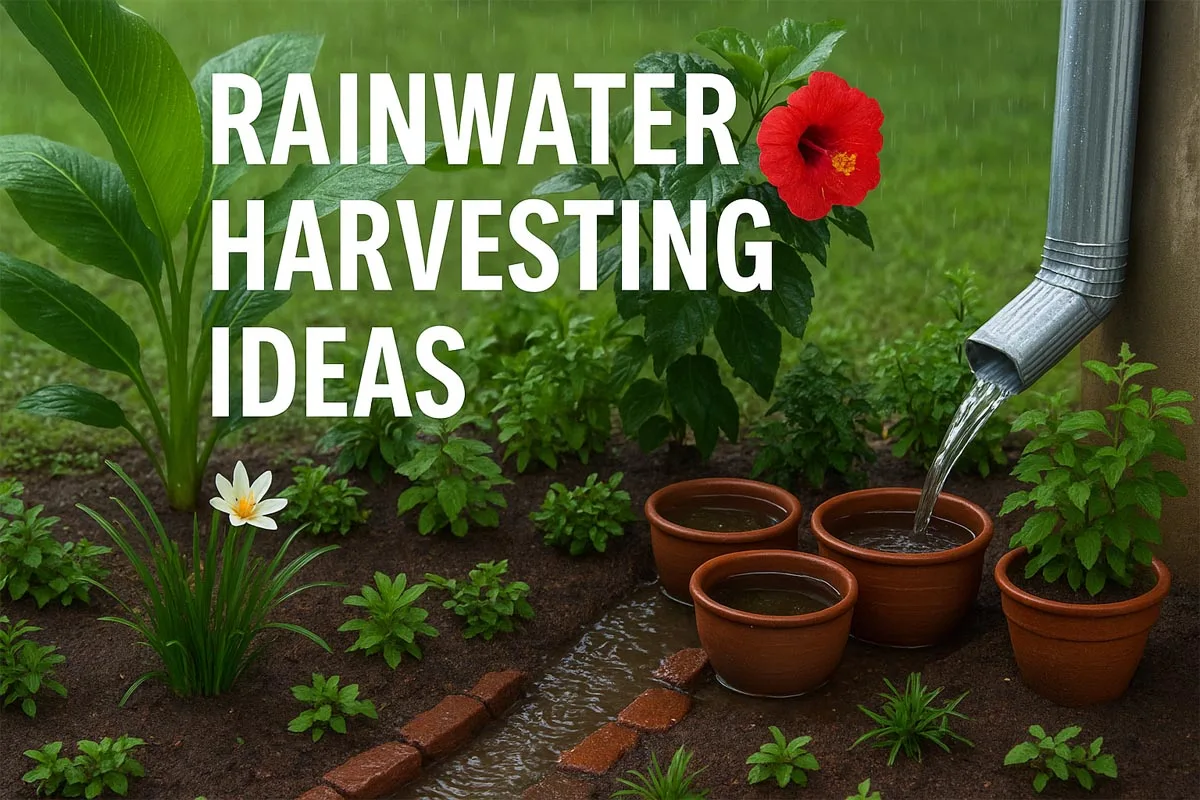
You don’t need a complex system to get started. Here are some simple rainwater harvesting ideas for home gardeners:
1. Rooftop Collection System
Install gutters on your roof that direct rainwater into a large drum or tank. Use a mesh screen to filter debris and mosquitoes.
2. Rain Barrels Under Downspouts
Attach barrels to your home’s drainage pipes. A tap at the bottom makes it easy to fill watering cans.
3. Balcony Rain Catchers
If you’re gardening in an apartment, place wide buckets or tubs on your balcony to collect rainwater directly.
4. Garden Bed Contour Traps
Create small trenches or berms to channel rainwater into garden beds naturally.
Also Read This :June Gardening Checklist: What to Plant, Prune, and Prepare
Best Plants for Rainwater Gardens
Choose plants that:
- Thrive in moist or waterlogged soil.
- Benefit from seasonal rain patterns.
- Require less manual watering.
Here are ideal plants for Indian rainwater gardens:
Flowers:
- Canna Lily
- Rain Lily (Zephyranthes)
- Hibiscus
- Balsam
- Ginger Lily (Hedychium)
Vegetables:
- Spinach (Palak)
- Coriander (Dhaniya)
- Bottle Gourd (Lauki)
- Amaranth (Chaulai)
- Fenugreek (Methi)
Native Shrubs & Trees:
- Guava (Amrud)
- Drumstick (Moringa)
- Lemon Tree
- Indian Gooseberry (Amla)
These plants adapt well to the natural water cycle and need minimal artificial irrigation.
Tips to Avoid Overwatering in Monsoon
Too much rain can damage roots or lead to fungal issues. Here’s how to protect your plants:
- Ensure Drainage: Use pots with multiple holes and add pebbles or broken terracotta at the bottom.
- Avoid Water Retention in Saucers: Empty water-collecting trays to prevent root rot.
- Aerate the Soil: Loosen soil frequently to prevent compaction.
- Use Raised Beds: Ideal for kitchen gardens to avoid waterlogging.
- Add Mulch: Helps regulate moisture and prevents soil erosion.
Also Read This :Top 10 Rain-Loving Plants to Grow in Indian Homes This June
How to Design a Rainwater-Friendly Garden
If you’re starting fresh or redoing your layout, design it to capture and utilize rainwater more efficiently:
1. Slope Your Garden Beds
Arrange garden beds to slope gently inward so rainwater stays in the root zones.
2. Create Rain Gardens
Design small depressions with water-loving plants to collect runoff and allow natural absorption.
3. Group Plants by Water Needs
Put water-loving plants in lower areas and drought-tolerant plants higher up.
4. Install Overflow Pipes
Ensure excess rain from containers is redirected safely to avoid spillage or flooding.
Rainwater Storage and Safety Tips
Rainwater is naturally clean but can collect dust or bird droppings. Follow these safety practices:
- Cover all tanks and barrels.
- Install first-flush diverters to avoid the first dirty batch of rain.
- Use only clean containers, preferably food-grade.
- Avoid using rainwater on edible parts of plants directly; always water at the roots.
Environmental Benefits of Rainwater Gardening
- Reduces water bills and groundwater depletion.
- Prevents urban flooding by reducing runoff.
- Improves plant health by using chemical-free water.
- Encourages self-reliance and sustainability.
By aligning your gardening habits with the monsoon, you also contribute to environmental conservation.
Also Read This :World Environment Day 2025: How Home Gardening Can Help Heal the Planet
June Monsoon Gardening Action Plan
| Week | Tasks |
| Week 1 | Clean containers, set up rain collection buckets, prepare soil |
| Week 2 | Start planting rain-loving flowers and vegetables |
| Week 3 | Monitor water levels, mulch garden beds |
| Week 4 | Check drainage, apply compost, remove excess weed growth |
Pro Tips from Garden Experts
- Mix vermicompost with garden soil for better water retention and nutrients.
- Install a simple drip irrigation system linked to your rain barrel.
- Apply organic neem spray weekly to prevent monsoon pests.
Conclusion
Monsoon is not just about rain—it’s about renewal. With rainwater gardening, you can embrace this season to grow a vibrant, eco-friendly garden that saves water and thrives naturally. Whether you have a small urban balcony or a backyard garden, this approach makes your space greener, cleaner, and more sustainable.
Let this monsoon be the beginning of your rainwater gardening journey, and watch your plants thank you with lush leaves and blooming flowers.
Also Read This :Best Plants to Grow in June in India: Complete Gardening Guide (2025)
FAQs – Rainwater Gardening in India
Q1: Is rainwater safe for all types of plants?
Yes, rainwater is chemical-free and generally better than tap water. It’s safe for all plants.
Q2: How do I store rainwater safely?
Use covered, food-safe containers. Filter and clean regularly to prevent mosquito breeding.
Q3: What plants grow best with rainwater?
Plants like rain lily, spinach, hibiscus, lemongrass, and gourds thrive with rainwater.
Q4: Can I use rainwater directly from my roof?
Yes, but use a mesh filter and discard the first flush of rain to ensure clean water.
Q5: How much rainwater do I need for a small garden?
Even 100–200 liters from a rooftop can support a 10–15 pot garden for weeks.