Blogs
Horticulture vs Agriculture: What’s the Real Difference and Why It Matters for Home Gardeners?
Introduction: Same Soil, Different Goals
If you’ve ever wondered whether your love for gardening counts as agriculture or horticulture—you’re not alone. These two terms are often used interchangeably, but in reality, they have different scopes, techniques, and purposes.
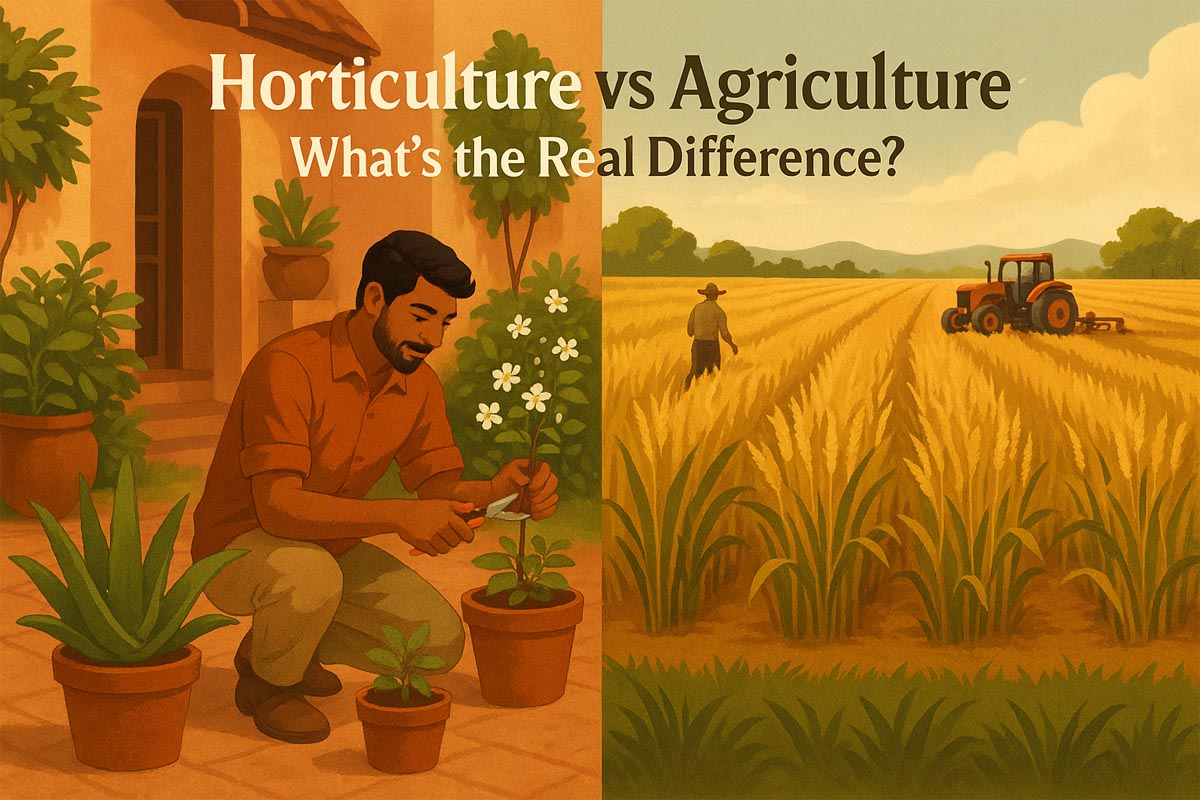
While both deal with growing plants and improving soil productivity, horticulture is the art of garden and plant cultivation, and agriculture is the science of food crop and livestock production on a broader scale.
So why should this matter to you as a home gardener in India? Because understanding the distinction can enhance how you care for your plants, choose what to grow, and even how you compost or fertilize.
Let’s dig deep—literally.
What Is Agriculture?
Agriculture is the practice of cultivating crops and rearing animals for food, fiber, fuel, and other human needs. It is often done on large pieces of land using mechanized tools, irrigation systems, and chemical inputs.
Key Features:
- Focus: Mass food production (rice, wheat, maize, etc.)
- Scale: Large fields or farms
- Techniques: Irrigation, ploughing, fertilization, pest control
- Output: Food grains, pulses, livestock, dairy, etc.
- Requires: Heavy labor, planning, seasonal management
Example: Paddy fields in Punjab or wheat farms in Madhya Pradesh.
What Is Horticulture?
Horticulture, derived from the Latin words “hortus” (garden) and “cultura” (cultivation), refers to the intensive cultivation of fruits, vegetables, ornamental plants, herbs, and flowers.
Key Features:
- Focus: Quality and variety of plants (not just quantity)
- Scale: Small-scale gardens, greenhouses, balconies
- Techniques: Pruning, grafting, organic composting, container planting
- Output: Fruits, flowers, bonsai, indoor plants, vegetables
- Requires: More care per plant, aesthetic focus
Example: A rooftop herb garden in Delhi or a rose nursery in Pune.
Also Read This :Brahma Kamal in Mythology and Medicine – Secrets of India’s Rare Sacred Flower
Side-by-Side Comparison: Horticulture vs Agriculture
| Feature | Agriculture | Horticulture |
|---|---|---|
| Scale | Large farms and fields | Small plots, gardens, pots |
| Primary Goal | Food and resource production | Plant beauty, diversity, quality |
| Types of Crops | Cereals, pulses, oilseeds, livestock | Fruits, vegetables, flowers, herbs |
| Tools & Equipment | Heavy machinery | Manual tools or light equipment |
| Economic Role | Backbone of Indian economy | Emerging industry (floriculture, etc.) |
| Time & Attention | Less per plant | More per plant |
🇮🇳 Why It Matters for Home Gardeners in India
India is a land of small spaces and big dreams when it comes to gardening. Whether you have a balcony, backyard, or rooftop, your work is technically horticulture—not agriculture.
Understanding this helps you:
- Choose the right fertilizers and compost (organic vs chemical)
- Focus on varieties suited for pots or containers
- Learn seasonal planting cycles for herbs and vegetables
- Use horticultural practices like pruning, mulching, grafting
- Avoid common mistakes like over-watering or using incorrect soil
Pro Tip: Instead of thinking like a farmer, think like a plant artist. Your goal is beauty, balance, and bloom—not just yield.
Also Read This :Why Brides and Gods Adore Mogra – The Sacred Story of India’s Favorite Flower
Types of Horticulture: What Kind Do You Practice?
Horticulture is a broad field with several branches. Here’s what you might already be doing without realizing it:
- Floriculture – Growing flowers like roses, marigold, mogra, hibiscus
- Pomology – Growing fruits like lemon, guava, pomegranate
- Olericulture – Growing vegetables like tomato, chili, spinach
- Landscape Gardening – Designing aesthetic garden spaces
- Plantation Horticulture – Specialized crops like tea, coffee, spices (in larger estates)
Future of Agriculture vs Horticulture in India
India is already the second-largest producer of fruits and vegetables in the world. With the growth of organic farming, urban gardening, and awareness about sustainable living, horticulture is the future for home-based plant lovers.
Meanwhile, agriculture is evolving with technology: drone farming, AI-based irrigation, and sustainable cropping systems are transforming how farmers grow on a large scale.
For a home gardener, this means:
- You can use agricultural techniques like crop rotation in your veggie patch.
- But focus mainly on horticultural care: organic compost, pest control using neem oil, companion planting, etc.
Also Read This :Navgraha Plants and Their Spiritual Powers: Vedic Remedies Through Nature
Fun Facts You Didn’t Know
- The Ministry of Agriculture & Farmers Welfare in India has a dedicated Department of Horticulture.
- In ancient India, kings had their own horticulturists to maintain palace gardens (like Mughal gardens).
- The famous Litchi Festival in Bihar celebrates horticulture, not agriculture.
- The global floriculture industry is expected to grow to over $100 billion by 2027—most of it horticulture-driven.
Conclusion: Grow Smarter, Not Just Bigger
Understanding the difference between agriculture and horticulture helps you better manage your garden, choose the right crops, and even appreciate the science behind every flower and fruit you grow.
So the next time someone asks what you do, proudly say:
“I practice horticulture—and grow happiness, one plant at a time.”
Frequently Asked Questions (FAQs)
Q1. Is gardening considered agriculture or horticulture?
Gardening is a form of horticulture, especially when it involves flowers, fruits, or ornamental plants.
Q2. Can horticulture be done in small spaces like balconies?
Yes! In fact, urban horticulture is becoming very popular with the rise of kitchen gardens and indoor plants.
Q3. Do farmers practice horticulture too?
Yes, farmers growing fruits, flowers, or spices are horticulturists. However, large-scale food grain farmers are agriculturalists.
Q4. Which is more profitable—agriculture or horticulture?
For small landholders and home gardeners, horticulture can be more profitable per square meter due to high-value crops like exotic flowers and herbs.
Q5. Are horticultural crops seasonal?
Yes. Like agriculture, horticulture also follows seasonal cycles, but the plant care techniques differ.